Sustainable wood sourcing is the practice of procuring timber from forests where harvest rates do not exceed growth rates, verified by global standards like FSC™ and Indonesia's SVLK. In modern architecture, this shifts the paradigm from carbon-emitting materials like steel and concrete to carbon-sequestering engineered wood. Advanced processing, such as Orthogonal Cross-Lamination, ensures these organic materials achieve structural stability (MOR 25-30 MPa) comparable to synthetic alternatives, making them the viable future for eco-conscious construction.
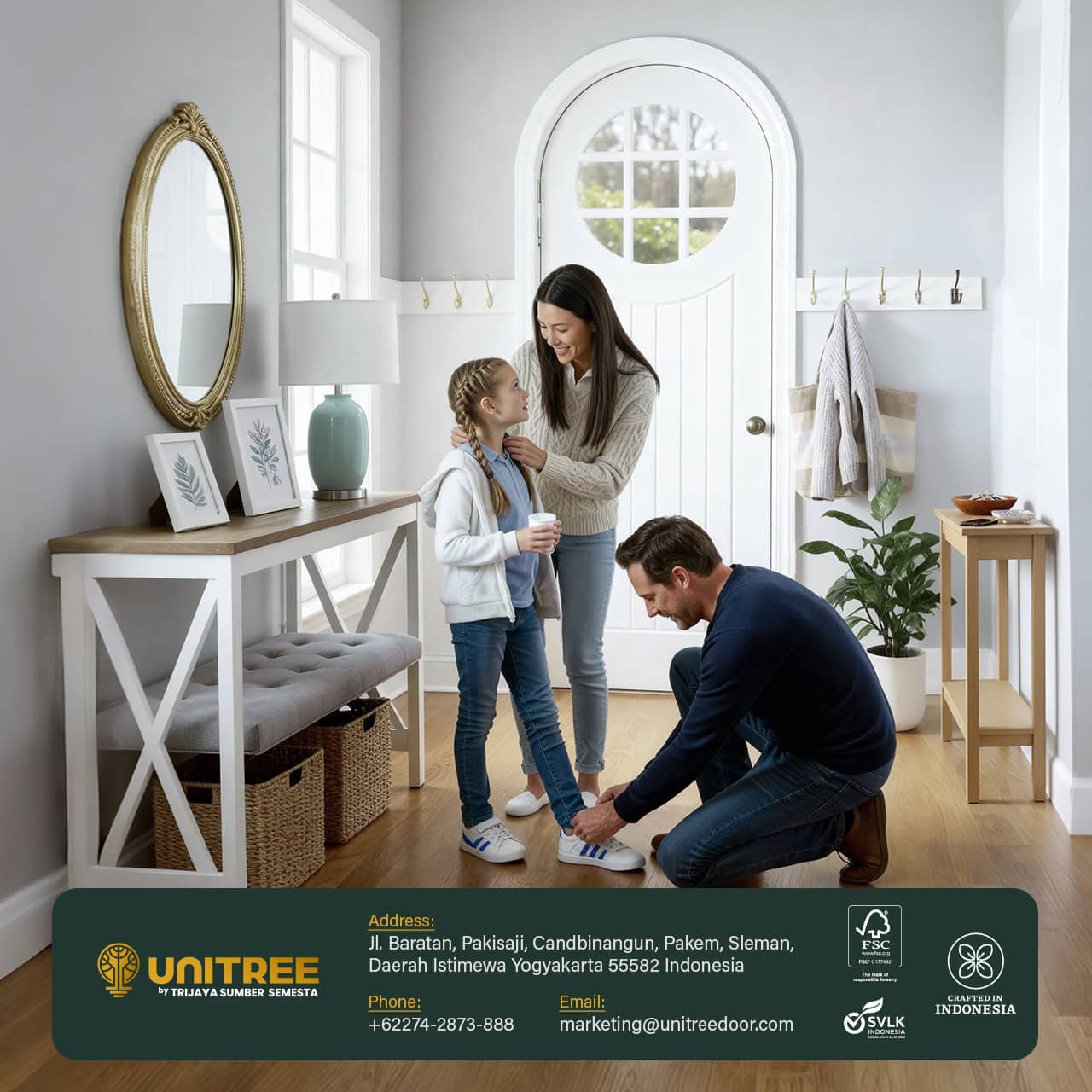
The "Why" Bridge: Moving From Aesthetics to Performance
Sustainable timber performance is defined by its capacity to sequester carbon while meeting rigorous structural demands. While biophilic design has traditionally focused on the psychological benefits of wood aesthetics, modern engineering prioritizes Embodied Carbon reduction. By integrating wood into the building envelope, architects can actively remove CO2 from the atmosphere, as one cubic meter of wood stores approximately one ton of carbon dioxide.
This transition from "visual choice" to "structural necessity" is driven by global carbon targets. Unlike steel production, which emits massive amounts of CO2, timber manufacturing by PT. Trijaya Sumber Semesta (TSS) utilizes sustainable plantation wood. This approach allows developers to earn LEED and BREEAM credits while ensuring the building remains a "carbon sink" throughout its multi-decadal lifecycle.
How Does Engineered Stability Equal Sustainability?
Engineered stability is the primary driver of sustainability because it directly determines the longevity and replacement cycle of architectural components. A wood product that warps or fails within five years represents a failure in sustainability, regardless of its original "green" source. High-precision engineering, such as the Nusantara Core, extends product lifecycles by neutralizing the natural tendencies of wood to expand and contract.
The Nusantara Core employs a proprietary 1+3 Structural Recipe, consisting of one finger joint and three butt joint strips. This specific arrangement, combined with Orthogonal Cross-Lamination, ensures the core achieves a Modulus of Rupture (MOR) of 25-30 MPa. By maintaining a Moisture Content (MC) of 8-12%, TSS ensures that Unitree Door products remain stable across four-season climates, significantly reducing material waste caused by structural failure.
What is the Role of Legal Certifications (SVLK & FSC)?
Legal certifications serve as the essential verification mechanism for the "Chain of Custody" in the timber supply chain. For international architects and developers, certifications like SVLK and FSC™ provide the legal and ethical assurance required to bypass trade barriers and meet environmental compliance. These frameworks ensure that every piece of timber used in Unitree Door production is harvested from renewable, legally managed sources.
| Certification Standard | Scope of Verification | Global Recognition | TSS Compliance Detail |
|---|---|---|---|
| SVLK (FLEGT) | Indonesian Timber Legality & Traceability | Required for EU (EUTR) & UK markets | License: VLHH-34-07-0026 |
| FSC™ | Social, Economic, & Ecological Responsibility | Global Gold Standard for Sustainability | Code: C177492 |
| Kiln Drying | Structural Stability & Moisture Control | International Standard (8-12% MC) | Ensures 4-season durability |
Material Spotlight: Why Albasia Falcata?
Albasia Falcata (Sengon) is a high-yield plantation wood that serves as the premier renewable resource for engineered cores due to its rapid growth cycle. Unlike traditional hardwoods that require over 50 years to mature, Albasia reaches harvestable size in 5 to 7 years. This rapid renewal rate makes Albasia Falcata a critical component in meeting the high-volume demands of global construction without depleting natural old-growth forests.
PT. Trijaya Sumber Semesta transforms this lightweight material into a high-performance core through Vacuum Processing and specialized Kiln Drying. By removing internal moisture and treating the wood for pest resistance, TSS creates a durable, stable interior for Unitree Door lines. This process turns a fast-growing soft timber into a structural asset that rivals the performance of slower-growing, less sustainable species.
Case Study: Global Adoption of Engineered Doors
Global adoption of engineered wood products is accelerating in regions with strict environmental regulations, such as California, the Netherlands, and Scotland. Architects in these markets are increasingly specifying Unitree Door products because they combine the "Quiet Luxury" of natural veneers with the industrial-grade stability of the Nusantara Core. This adoption proves that sustainable engineering is no longer a niche preference but a global industry standard.
The Unitree Door product line offers diverse applications for these markets:
- Engineering Doors: Utilize natural veneers over stable cores for weather resistance in Texas and Australia.
- Flush Doors: Provide minimalist contemporary design for residential projects in Singapore.
- HPL Doors: Offer high-durability solutions for commercial sectors in the Middle East.
- Solid Doors: Use authentic tropical wood for premium architectural requirements.
FAQ
Q1: Is engineered wood as durable as solid wood? Yes. Through Orthogonal Cross-Lamination, engineered cores like the Nusantara Core often exceed natural wood stability by neutralizing internal stresses. This process achieves a Modulus of Rupture (MOR) of 25-30 MPa, ensuring the product resists warping and cracking better than solid timber in variable climates.
Q2: What is the difference between SVLK and FSC? SVLK is Indonesia's mandatory legality assurance system, recognized by the European Union under the FLEGT program to guarantee timber legality. FSC™ is a voluntary global standard focused on broader social and ecological forest management. PT. Trijaya Sumber Semesta maintains both certifications to ensure maximum global compliance.
Q3: Why is Albasia Falcata considered sustainable? Albasia Falcata is a plantation-grown species that matures in only 5-7 years, making it a highly renewable resource compared to hardwoods. Its use reduces pressure on natural forests while providing a stable, lightweight material for high-performance engineered door cores.
